
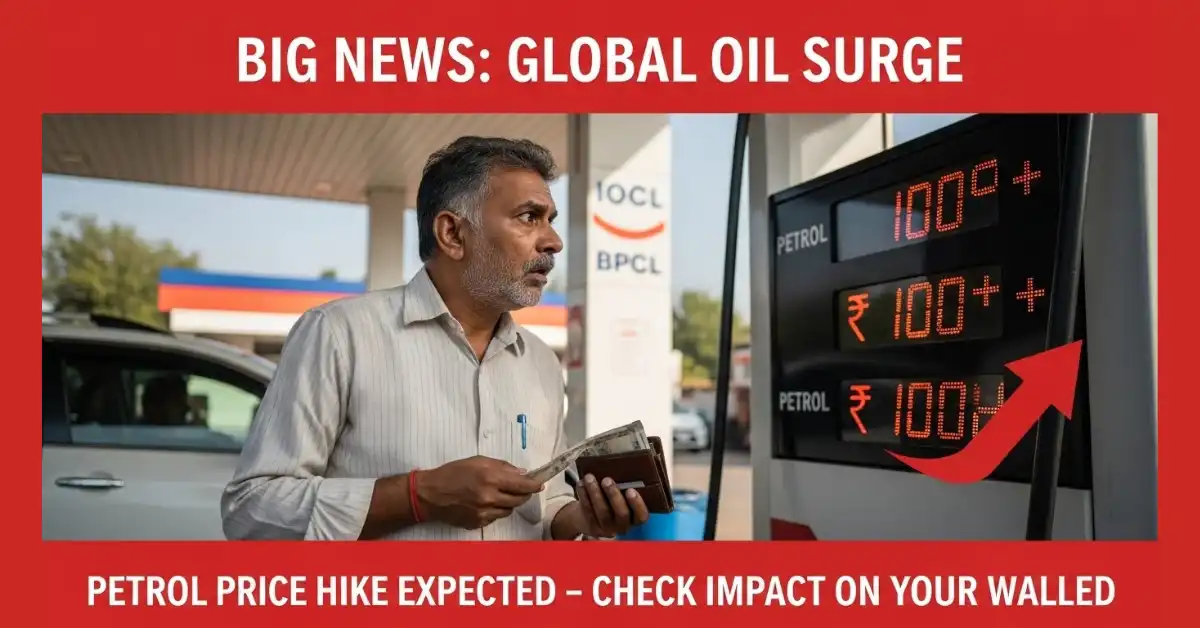
A major financial shock may hit Indian households this week: petrol and diesel prices are set to rise by ₹2.50–₹3.80 per litre from January 6, 2026, following a sharp 12% surge in global crude oil prices. With Brent crude crossing $89 per barrel—its highest level since October 2025—state-owned oil companies are under pressure to revise rates after holding them steady for 42 days. For the average Indian commuter, this could mean ₹300–₹500 extra monthly fuel expenses, while inflation-sensitive sectors like transport, logistics, and agriculture face renewed cost pressures just weeks before the Union Budget 2026.
Know Complete Details
The price hike is driven by three key global developments in early 2026:
- Geopolitical tensions in the Middle East disrupting supply routes
- OPEC+ production cuts extended into Q1 2026, reducing global supply by 2.2 million barrels/day
- U.S. dollar strength making crude imports costlier for India, which imports 86% of its oil
Although India’s dynamic fuel pricing model revises rates daily, oil marketing companies (IOCL, BPCL, HPCL) have delayed the hike to avoid public backlash during the New Year. But with refining margins shrinking to ₹2.10/litre (below the sustainable ₹3.50), a correction is now unavoidable.
Expected price revision (January 6, 2026):
- Delhi: Petrol ₹102.80 → ₹105.60 (+₹2.80) | Diesel ₹89.70 → ₹92.50 (+₹2.80)
- Mumbai: Petrol ₹108.20 → ₹111.50 (+₹3.30)
- Chennai: Petrol ₹104.10 → ₹107.40 (+₹3.30)
- Kolkata: Petrol ₹103.40 → ₹106.90 (+₹3.50)
💡 Note: Prices vary by state due to VAT—Rajasthan, Tamil Nadu, and Telangana may see steeper hikes.
How It Affects You
Even if you don’t drive, the ripple effects will touch your daily life:
- Commuters: A daily 20-km bike ride (40 km round) could cost ₹12–₹18 more per week.
- Public transport: Auto and cab fares may rise by 8–12% in metro cities.
- Essential goods: Transport costs for vegetables, milk, and FMCG items could spike—adding ₹150–₹250/month to household bills.
- Farmers: Diesel-powered irrigation and harvesters will cost more, potentially impacting crop pricing ahead of Rabi procurement.
For salaried employees, transport allowances (₹1,600–₹3,200/month) may no longer cover fuel costs, squeezing disposable income in Q1 2026.
How to Reduce the Impact
Take these 3 smart steps before prices rise on January 6:
- Fill your tank by January 5: Avoid the first-week surge.
- Switch to CNG/EV: Many states now offer ₹15,000–₹25,000 subsidies on electric two-wheelers under FAME India Phase III (2026).
- Use public transport incentives: Delhi, Bengaluru, and Pune offer 50% metro/bus fare discounts for monthly passes—check your local transport app.
🚨 Budget 2026 Watch: Finance Minister Nirmala Sitharaman may announce a temporary excise duty cut of ₹1–₹2/litre in the February 1, 2026 Budget to control inflation.
Government’s Response
The Ministry of Petroleum confirmed it is “monitoring the situation daily.” While no immediate intervention is planned, sources reveal the Strategic Petroleum Reserve (SPR) in Visakhapatnam and Mangalore may be tapped if crude breaches $92/barrel—a move that could soften domestic prices by ₹1–₹1.50/litre.
Meanwhile, the RBI has flagged “heightened inflation risks” in its January 2026 monetary policy preview, potentially delaying rate cuts that could ease loan EMIs.
Final Warning: Act Before January 6
This isn’t just a fuel crisis—it’s a cost-of-living alert for every Indian family. With global oil markets volatile and Budget 2026 around the corner, proactive planning is essential.
✅ Check live fuel prices: Use the Fuel@IOC or MyHPCL apps
✅ Track crude trends: Brent crude above $87 = likely hike
✅ Plan grocery runs: Buy essentials before mid-January price adjustments
Comment below with your city’s current petrol price—or share how you’re cutting fuel costs in 2026! Stay updated with ShouryaIndia.in for real-time financial alerts that protect your wallet.
Sources: Petroleum Planning & Analysis Cell (PPAC), Ministry of Petroleum & Natural Gas Press Briefing (Jan 3, 2026), OPEC Monthly Oil Market Report (January 2026), RBI Monetary Policy Preview Note No. MP/2026/01.